
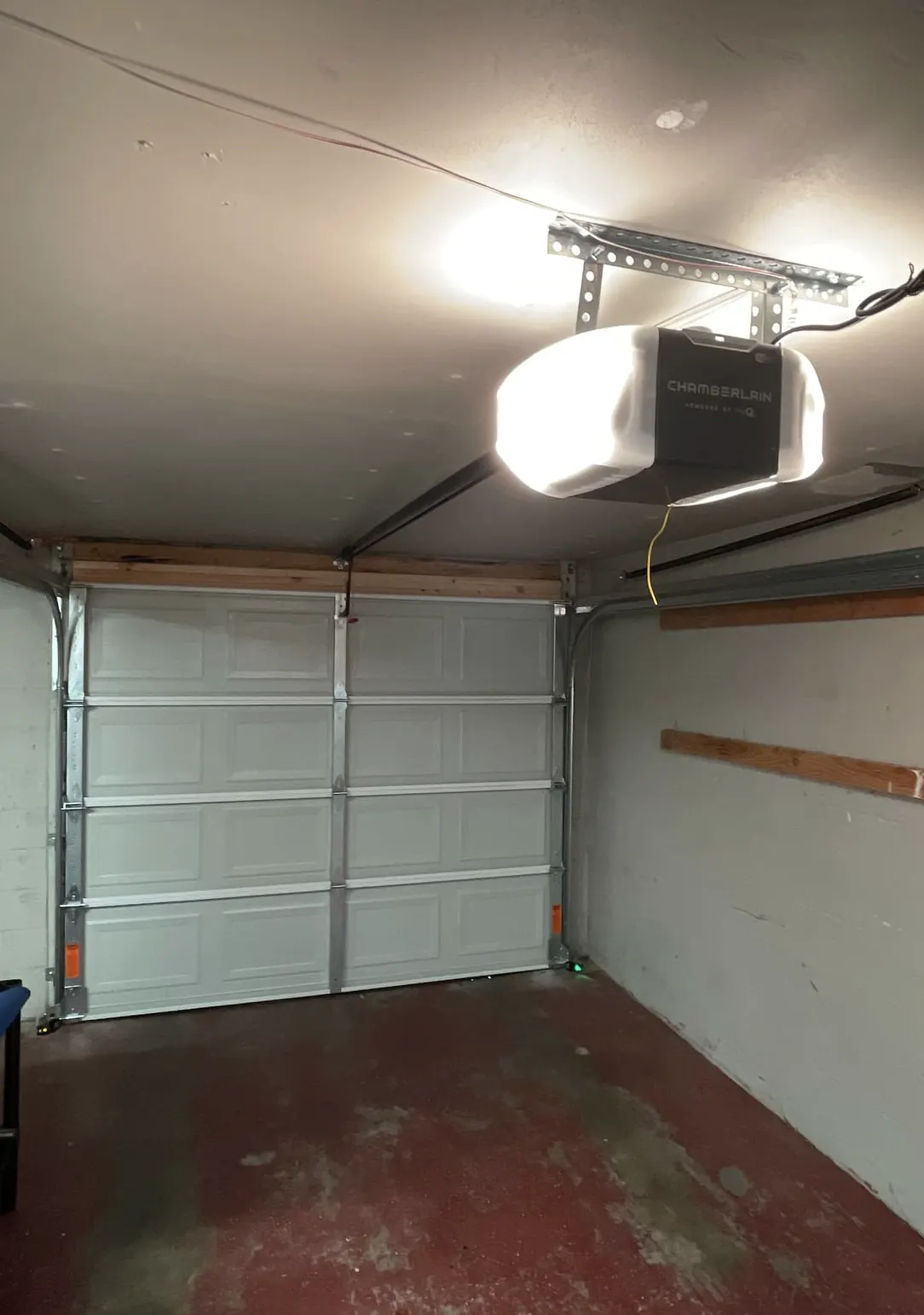
Ignore This Cord, Pay for It Later
Every garage door has a red handle hanging from a rope near the opener trolley. Most homeowners never touch it until the power goes out during a storm or the opener suddenly stops responding. The problem is that the cord works differently depending on what's actually wrong with your door, and pulling it at the wrong moment can turn a quick fix into a trip to urgent care or a cracked panel that needs replacing. Go another season without knowing the difference, and you're betting that the one time you need it, you'll guess right.
What the Release Cord Is Actually For
The cord disconnects the trolley from the drive carriage on the opener's rail. Once disconnected, the door is no longer attached to the motor at all — it runs purely on its springs and your own muscle. This exists for one reason: so you can open or close the door by hand when the opener can't do it, whether that's a dead battery backup, a tripped breaker after an afternoon downpour, or a motor that's simply failed.
When everything else about the door is healthy — springs intact, rollers on track, cables seated — pulling the cord is safe and the door should move smoothly by hand, roughly as easy to lift as a loaded suitcase. If it feels much heavier than that, something else is already wrong, and the cord just exposed it.
When Pulling It Is the Right Call
- Power outage during a storm. Tropical weather here regularly knocks out power for hours. If you need to get a car out or secure the house before wind picks up, releasing the trolley lets you move the door manually.
- Opener motor failure with a healthy door. If the opener hums, clicks, or does nothing, but the door itself looks fine — no sagging, no visible gaps in the tracks — the cord lets you operate the door while you wait on a repair.
- Battery backup drained. Many openers have a backup battery that fades after repeated outages during storm season. The cord is your fallback until it's replaced.
When Pulling It Makes Things Worse
This is the part most people don't know, and it's where injuries happen.
- A broken spring. The springs, not the opener, carry almost all the door's weight. If a spring has snapped, the opener's motor and its back-pressure are the only thing keeping an otherwise unsupported door from dropping. Pull the cord in this situation and the door can free-fall onto anything — or anyone — beneath it. A door stuck halfway open on a broken spring should never be released; call a technician instead.
- A door that's off track. Panels that have jumped the track, which happens more often here after a hard gust slams a door that's slightly misaligned, can bind or twist unpredictably. Releasing the trolley removes the one thing holding the panels in a straight line, and the door can drop unevenly, jam, or crack a panel.
- The door is already up when you pull it. If you disconnect while the door is open and the springs are weak or worn — common after years of coastal humidity swelling the wood or rusting the spring coils — the door can slam shut with real force. Always release the cord with the door fully closed when possible.
- A corroded or stiff release mechanism. Salt air along the coastal parts of our service area works into the release arm and pulley over time. A cord that's supposed to move freely but instead sticks or snaps back can pinch fingers or fail to fully disengage, leaving the door half-connected and unpredictable.
The Specific Actions That Prevent a Bad Outcome
- Test it once a year, on your terms. With the door closed, pull the cord and manually lift the door a few inches. It should move with moderate, even resistance. If it's heavy, lopsided, or won't budge, that's a spring or track problem to fix before you ever need the cord in an emergency.
- Know how to reconnect it. After manual use, most doors reconnect by pulling the door down fully, then running the opener — the trolley will click back into the carriage. Don't force it if it doesn't catch; that usually means the trolley or rail needs attention.
- Never release a door you can't see fully. If part of the door is hidden behind a parked car or stacked storage, you can't judge whether it's safe to drop.
- Keep the release arm clean and lightly lubricated. A quick wipe-down and a drop of garage-door-rated lubricant during your seasonal tune-up keeps salt air and humidity from seizing the mechanism right when a storm knocks the power out.
- If the door won't move smoothly by hand, stop. That resistance is telling you the springs or tracks are compromised — pulling harder or forcing the door only increases the chance it drops suddenly.
When to Call Clearwater Door & Opener
If your door feels heavy, uneven, or won't stay up when you test the release cord, that's a spring problem, not an opener problem — and it's not a safe DIY fix given how much force a garage door spring carries. Our Garage Door Spring Repair service handles exactly this, replacing worn or snapped springs with the correct wind-rated hardware for our storm-prone area. If the release mechanism itself is stiff, rusted, or won't reconnect properly, our Garage Door Maintenance & Tune-Up visit cleans, lubricates, and adjusts the whole opener assembly so it's ready before the next outage, not during one.
Don't wait for a storm to find out your release cord — or your springs — aren't ready. Call Clearwater Door & Opener today and we'll have a technician out to check your door before hurricane season tests it for you.